 Learning
 Credentialing
 Compliance

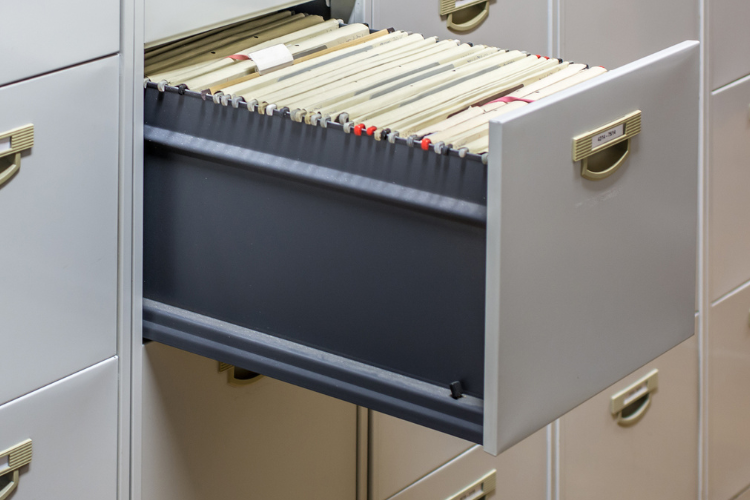
There’s a scene in the movie Bruce Almighty where Jim Carrey’s character asks God to see the file of his life. When he opens the file cabinet drawer, it cannonballs across the room with Bruce hanging on for dear life. A paper-driven healthcare document management system may feel like Bruce’s drawer – loads of information crammed into a small, unorganized space barreling toward you at warp speed.
There’s no quick way of knowing if your documentation is current or complete. Do your policies align with today’s regulations? When was the last time they were reviewed with staff? Could you find what is needed when a surveyor is watching?
If you’re not fully confident answering yes to these questions, you’re exposing your organization to confusion, audit findings, and even compromised patient care. Healthcare compliance documentation is complex and it’s time for a system that matches the complexity you’re tasked with managing.
In this article, I’ll share how digital healthcare document management systems have evolved in healthcare, the benefits you can expect, and the features you should look for in a healthcare-specific solution.
What Is a Healthcare Document Management System?
A healthcare document management system stores, shares, tracks, and manages the large volumes of documents generated in a healthcare organization. This includes compliance documents and policies, job aids, HR forms and paperwork, contracts, and more. An efficient document management system helps healthcare organizations free up staff time, maintain compliance, onboard new employees faster, and meet accreditation requirements. These systems can be digital or manual, together in one platform or multiple tools, and general or industry-specific. They perform a wide range of functions depending on the organization’s need; from drafting, to distribution, signature capture, reporting, and more.
The Evolution of Healthcare Document Management
The healthcare industry has long relied on traditional paper-based systems, and document management is no exception. Let’s take a look at how document management systems have evolved over time.
Past: Paper-Based Systems
Many healthcare compliance and HR professionals have likely felt like Jim Carrey’s character in Bruce Almighty with paper files, lists, and contracts everywhere. The sheer volume of information and paper is unmanageable. On top of high cost and inefficiencies, paper documents are susceptible to risks ranging from natural disasters to fires to burglary.
Present: Multiple Digital Tools
Many healthcare organizations moved from paper to tools like spreadsheets, electronic signature platforms, online storage, and PDF makers. This reduces risk for the organization and provides some level of efficiency, but does not help with the volume. It can still be difficult to keep documentation complete and current as updates, approvals, and acknowledgments change. HR and compliance professionals are now uploading, downloading, and moving files from one electronic location to another.
Future: Single Online Platform
Currently, the highest level of document management efficiency brings all the separate digital tools into one healthcare document management platform that streamlines healthcare-specific processes. The software should facilitate the board approval process, allow for electronic signatures, provide accessibility to policies and job aids, and offer the comprehensive reporting and tracking needed for compliance audits.
How a Document Management System Keeps You Complete and Current
If you have to stop and double-check what is current, trace changes across records, or reconcile conflicting information, that hesitation is telling. It signals a lack of confidence in the reliability of your documentation and whether it can consistently support your compliance expectations.
A healthcare document management system brings organization and action to policies, training documentation, HR files, contracts, acknowledgments, and more. It’s easy to see when policies are due for an update, when staff are accessing an older version, forms are not signed, or policies are non-compliant. Today’s document management systems include AI-enabled workflows that flag non-compliant policies and suggest edits.
To keep your documents current and complete, you need real-time visibility into status. Document management systems include customizable reports to see which staff have not acknowledged a new policy, policies due for an update, and even the staff that you forgot to share documents with. You get a proactive approach to compliance that isn’t available with outdated systems or paper-based processes.
Importance of Healthcare-Specific Document Management
Let’s start with the importance of healthcare-specific document management. Healthcare organizationsare required to have documentation that is current, traceable, and defensible across multiple compliance domains, not just stored somewhere your team can access. Each different care setting provides intricate, complex services that require specialized knowledge and procedures. The regulatory requirements dictate specific processes that may not be needed in other industries – for example, the need to report on the date of a policy update or to provide a list of the policies acknowledged by a specific employee. When the system supporting document management is not built for healthcare requirements, it becomes harder to keep records aligned and current across the organization.
These unique attributes demand specific functions a generalized document management system may not be able to provide:
- Time is precious for everyone in a healthcare organization and converting every Microsoft Word file or .JPG to a PDF is just not practical. A document editor, fillable forms, and automated signature capture are needed to complete healthcare workflows.
- Signature flow is a must for grants and accreditation. Digital healthcare document management systems create a chain of signers where the first approver signs and the document is automatically sent to the next person in line. Once all signatures are collected, the system notifies the document owner.
- Accrediting organizations want to see all versions of a document or policy, so you need a solution where all document actions are automatically tracked and you can easily provide real-time status, analytics, and reports when asked.
Key Benefits of a Digital Healthcare Document Management System
Business Benefits
- Reduced Document Management Costs: Eliminating multiple digital tools consolidates vendors and contracts, saving money for the healthcare organization. Solutions that are healthcare specific are often less expensive than mainstream, generalized solutions that cater to large industries.
- Increased Efficiency: Smoother document management processes certainly reduce burdens on the person (or people) managing the system, but since every healthcare employee must review policies, you can multiply that productivity gain by everyone in the organization while reducing the risk that outdated policies, missing acknowledgments, or incomplete documentation slip through unnoticed.
Staff Benefits
- Organized, Easily Accessible Documents: Employees who can access policies and procedures from anywhere are more likely to consult these documents when there’s a question. This can improve your survey-readiness as well as the level of patient safety because employees are following the policies in place instead of guessing at what they can remember, with access to the most current policy version and clear proof that the right documents have been reviewed and acknowledged.
- More Time With Patients: Most healthcare professionals want to spend time caring for patients, not completing administrative tasks. If you’re able to reduce the time spent on paperwork and signatures, you’re likely to have happier employees and a stronger retention rate.
Must-Have Features in a Healthcare Document Management System
Review and Approvals
Bouncing from email to email with changes and approvals for policies is the last thing an auditor wants to see. Choose a document management system, such as MedTrainer, that automatically tracks versions, comments, and approvals all in one place so it’s easy to demonstrate compliance.
Automated Tracking
Busy HR professionals shouldn’t have to remember which employees have yet to sign this year’s handbook or acknowledge the new Code of Conduct. Use a system that automatically tracks these actions and where the data can be pulled into customizable reports to surface lagging employees or a signature you forgot to request.
Customizable Reporting
Customize and schedule reports to capture who has — or hasn’t — received and acknowledged any document in the system.
Electronic Signing
Our seamless mobile experience makes capturing signatures on any type of document (.docx, .pdf, .png, .jpg, and more) easy for internal and external approvers regardless of time or location.
One-Click New Hire Onboarding
Automatically assign training, policy attestations, and other work when new employees are added to the healthcare document management system. You can pre-set tasks based on role, department, and location.
Drag-and-Drop Organization
A drag-and-drop folder system makes it easy to keep things organized and cloud-based storage ensures all employees have access to important documents.
Experience the Power of MedTrainer Document & Policy Management
On average, MedTrainer customers say they save 40 hours a week, but I know that seeing is believing! Request a demo of MedTrainer Document & Policy Management to see why it is the go-to choice for organizations of all sizes.