 Learning
 Credentialing
 Compliance


Maintaining a high standard of compliance is paramount in the healthcare industry. The intricate web of regulations, laws, and ethical considerations can be overwhelming, making it essential for both healthcare organizations and individuals to stay current and knowledgeable — one way to achieve this is through medical compliance certification.
Medical compliance certification can bolster your organization’s reputation and ensure that you provide the highest level of care available. Medical compliance certification can assure patients, certification boards, and other organizations of your competence and commitment to excellence. In this article, you’ll learn the benefits of certification as well as the vital role healthcare compliance management systems play in helping you earn and maintain them.
What Is Medical Compliance Certification?
At its core, medical compliance certification is a formal recognition that an individual or organization possesses an in-depth understanding of the intricate web of compliance principles, regulations, and best practices that govern the healthcare industry. This goes beyond a mere familiarity with rule — it demonstrates a comprehensive grasp of the nuances and evolving nature of compliance within the healthcare industry.
When an individual or organization pursues medical compliance certification, it underscores their commitment to ethical conduct and patient-centered care. Adherence to regulations isn’t just a legal obligation. It’s also an ethical imperative that directly impacts patient safety, privacy, and overall well-being. By seeking certification, healthcare entities and professionals signal their dedication to putting patients first.
Because patient trust and confidence are crucial to any healthcare organization, medical compliance certification serves as assurance. Patients and stakeholders alike know that the healthcare professionals and institutions they engage with are meeting the highest compliance standards. They’re committed to education, adaptation, and process improvement, and have often invested in healthcare compliance software to simplify the requirements for all staff members.
Organizational Compliance Certification vs. Individual Compliance Certification
There are two different types of medical compliance certification: organizational and individual. Here’s the difference between the two:
- Organizational compliance certification: This type of certification is granted to healthcare organizations, clinics, hospitals, and other medical institutions that meet specific compliance standards and requirements. Organizational certifications often involve rigorous assessments, audits, and evaluations to ensure that the institution’s policies, procedures, and practices align with industry regulations. Examples of organizational certifications include HIPAA Compliance Certification and accreditation by recognized bodies such as The Joint Commission.
- Individual compliance certification: Individuals working within the healthcare industry can pursue certifications that validate their expertise in compliance-related matters. These certifications showcase their dedication to understanding and implementing regulations effectively. Examples of individual compliance certifications include the Certified in Healthcare Compliance (CHC) credential and Certified Compliance and Ethics Professional (CCEP) designation offered by the Compliance Certification Board (CCB).
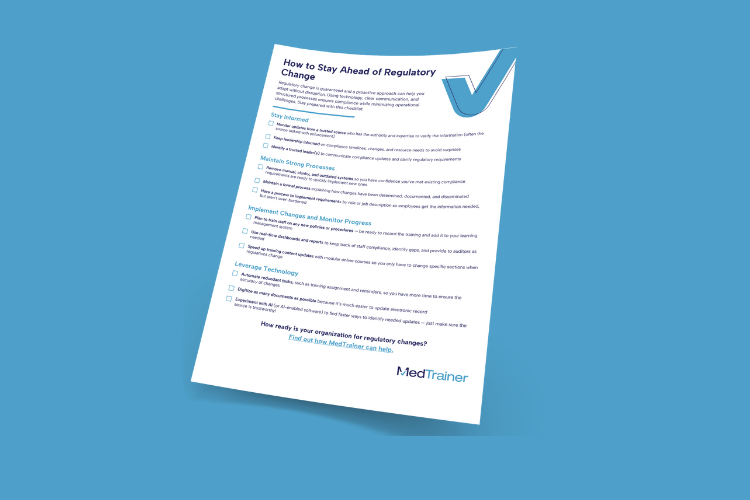
Stay ahead of regulatory change and minimize disruptions with these tips.
Is Medical Compliance Certification Required?
Medical compliance certification is not mandated by law as a blanket requirement for all healthcare professionals or organizations. The healthcare landscape is diverse and multifaceted, encompassing a wide range of specialties, roles, and settings. As such, the necessity for medical compliance certification can vary based on factors such as the specific field of practice, the regulatory environment, and the organization’s policies.
However, despite the lack of universal mandate, there are compelling reasons why many healthcare professionals and organizations choose to pursue medical compliance certification.
Benefits of a Medical Compliance Certification for Your Organization
Should you invest in medical compliance certifications for your organization? Here are some of the benefits you can expect:
- Enhanced regulatory compliance: Healthcare compliance certifications provide a structured framework for organizations to adhere to regulations, laws, and standards. Achieving compliance ensures that patient information is protected, safety protocols are in place, and ethical practices are maintained. Meeting these higher standards requires your organization to have a solid compliance program with efficient processes aided by a healthcare compliance management system.
- Improved patient care: Compliance isn’t just about ticking boxes; it directly impacts patient care. Certifications emphasize patient rights, data security, and safety measures. When healthcare professionals follow compliant practices, patients receive better care, their personal information remains confidential, and their overall experience is enhanced.
- Reduced risk: The healthcare landscape is fraught with legal and financial risks. Compliance certifications help mitigate these risks by instilling a culture of accountability and diligence. Organizations that achieve and maintain compliance certifications are better equipped to identify and address potential risks, reducing the likelihood of legal disputes and financial penalties.
- Increased efficiency: With standardized practices and protocols, healthcare organizations can streamline their operations. Compliance certifications often come with predefined processes that improve efficiency and reduce redundancies. Efficient workflows result in improved patient care delivery, reduced administrative burdens, and optimized resource allocation.
- Stronger reputation: A certified healthcare organization or individual enjoys a reputation of trustworthiness and reliability. Patients, partners, and stakeholders view compliance certifications as a mark of dedication to ethical conduct and quality care. A strong reputation attracts patients and establishes the organization as a leader in the industry.
- Commitment to continuing improvement: The pursuit of compliance certifications necessitates ongoing education and adaptation to evolving regulations. This commitment to continuous improvement is a cornerstone of healthcare excellence. Organizations that prioritize compliance certifications demonstrate their dedication to staying ahead of industry changes and challenges.
Medical compliance certifications aren’t mere badges — they are reflections of an organization’s dedication to patient care, ethical conduct, and regulatory adherence. Because healthcare demands unwavering dedication to compliance, these certifications pave the way for better patient outcomes, reduced risks, and a reputation that inspires confidence in patients and stakeholders alike.
Choose the Best Compliance Software To Support Certification
Healthcare compliance management platforms greatly simplify processes, making it easier for healthcare organizations to maintain medical compliance certifications. Customizable compliance tracking and reporting provides the audit trail that is expected for certifications and helps compliance leaders quickly spot potential gaps. Automated processes such as reminders, training assignment, and exclusions monitoring simplify management and improve accountability. Plus, software offers the ability to standardize across departments and locations so you know that all employees are taking the same high-quality courses and adhering to consistent procedures. When you choose and all-in-one compliance platform, like MedTrainer, all workforce compliance tasks are in one place so it easy for both staff and compliance professionals to maintain compliance.
Schedule time to talk with a MedTrainer expert to see how we can help!