 Learning
 Credentialing
 Compliance


Healthcare organizations work under strict regulations that reach nearly every part of care. This includes patient privacy, data security & fraud prevention. Regulatory standards in healthcare give providers clear requirements for handling sensitive patient information. Meeting healthcare regulatory requirements also helps reduce avoidable risk and gives compliance teams a clearer way to manage the day-to-day obligations.
A useful place to start is with four major federal healthcare regulations that shape many of those responsibilities. Understanding how each one works makes the larger rulebook much easier to sort through.
Why Are Healthcare Rules & Regulations Important?
Healthcare regulations set the minimum expectations for safe, responsible care. They give providers clear rules for patient treatment, medication practices, infection control, and medical equipment use. Those requirements help healthcare organizations reduce preventable errors. They’re needed to protect patients from avoidable harm.
Patient rights are another major reason these regulations exist. Privacy and confidentiality rules control how health information can be accessed. Patients gain legal protections around their medical records, and healthcare organizations have defined responsibilities for handling sensitive data. Those rules also give patients more control over decisions involving their care and personal information.
Healthcare compliance regulations also address access to care and fair treatment. Certain health rules place requirements on how organizations provide services, handle emergency care, and treat patients across different circumstances. The goal is to reduce discrimination, protect access to necessary services, and create clearer standards healthcare providers can follow.
Additionally, healthcare compliance regulations address issues of accessibility and affordability, aiming to have healthcare services accessible to all individuals, regardless of their socioeconomic status or insurance coverage. By promoting equity and fairness in healthcare delivery, regulations prevent discrimination with equal access to care and reduce health disparities. To do that, many organizations turn to a trusted and top-rated compliance company like MedTrainer for the solution. MedTrainer is preferred by healthcare professionals who want the best credentialing and compliance experience.
Who Establishes Healthcare Regulatory Requirements and Laws?
Most healthcare rules, laws, and compliance regulations are established by government agencies to protect patients. It can be a challenge to maintain compliance with so many different groups that establish rules and regulations in healthcare. Here’s a breakdown of the key players:
- Federal Government: The Department of Health and Human Services (HHS) is the primary federal agency responsible for health affairs.
- State Government: Each state has its own medical care regulations around professional licensure, operations, and safety.
- Accrediting Organizations: Independent organizations, such as The Joint Commission, usually require organizations seeking accreditation to meet higher standards of patient safety and quality of care.
- Professional Associations: Specialty organizations, such as the American Medical Association (AMA), often establish guidelines and codes of ethics that their members are encouraged to follow.
What Healthcare Compliance Regulations and Laws Do You Need to Know?
While there are plenty of regulatory standards in healthcare that organizations need to be familiar with and compliant with, there’s often an overlap. Most standards are part of the big four healthcare regulations. Here are the healthcare regulatory requirements you need to know above all others:
1. Health Insurance Portability and Accountability Act (HIPAA)
HIPAA focuses on protecting the privacy and security of patients’ health information, and establishes rules and standards for the use, disclosure, and safeguarding of protected health information (PHI). The Office of Civil Rights (OCR) is responsible for HIPAA enforcement.
HIPAA’s Privacy Rule grants patients control over their health information by providing them with rights to access, amend, and obtain an accounting of their PHI. The Security Rule sets requirements for implementing administrative, physical, and technical safeguards to protect electronic PHI. HIPAA also addresses the electronic exchange of health information. This allows secure transactions through the use of standardized code sets and unique identifiers.
Compliance with HIPAA is of utmost importance as it helps maintain patient confidentiality. It promotes trust between patients and healthcare organizations and mitigates the risk of data breaches and unauthorized access to sensitive health information.
2. Health Information Technology for Economic and Clinical Health Act (HITECH)
HITECH is an essential healthcare regulation component of the American Recovery and Reinvestment Act of 2009. It complements HIPAA by expanding its privacy and security provisions concerning electronic health records (EHRs) and health information technology (HIT).
HITECH emphasizes the importance of protecting patients’ health information in the digital era and encourages the use of secure technology to improve the quality and efficiency of healthcare services. HITECH encourages the adoption of EHRs by providing incentives to healthcare providers who demonstrate meaningful use of certified EHR technology. It also strengthens HIPAA’s enforcement mechanisms and imposes stricter penalties for non-compliance, establishing breach notification requirements.
3. Emergency Medical Treatment and Labor Act (EMTALA)
Everyone has the right to receive critical care when they need it, thanks to EMTALA. This federal law ensures individuals receive emergency medical care regardless of their ability to pay or insurance status.
Under EMTALA, all Medicare-participating hospitals with emergency departments are required to provide a medical screening examination to anyone who seeks treatment for a potential emergency condition. If an emergency condition is identified, the hospital must stabilize the patient’s condition or arrange for an appropriate transfer to another facility.
EMTALA’s primary objective is to prevent patient dumping, where hospitals deny treatment or transfer patients based on their financial situation. It’s crucial in regulatory healthcare, guaranteeing equal access to emergency medical services and upholding ethical standards in healthcare delivery.
4. Fraud and Abuse Laws
Fraud and abuse laws — such as the False Claims Act, the Anti-Kickback Statute, and Stark Law — create accountability and trust within the healthcare industry:
- The False Claims Act is a healthcare regulation that prohibits knowingly submitting false claims to the government for payment, imposing substantial penalties and liability for individuals or organizations found in violation.
- The Anti-Kickback Statute prohibits the exchange of anything of value in return for referrals of federal healthcare program beneficiaries. This protects the patient’s best interests rather than financial incentives.
- Stark Law prohibits physicians from referring patients for certain designated health services to entities with which they have financial relationships, avoiding any conflicts of interest.
Compliance with fraud and abuse laws is essential in maintaining the integrity of the healthcare system, protecting public funds, and ensuring patients receive appropriate and unbiased care. These healthcare compliance laws help prevent fraud, unnecessary procedures, and conflicts of interest, ultimately safeguarding patients and preserving the trust between healthcare providers.
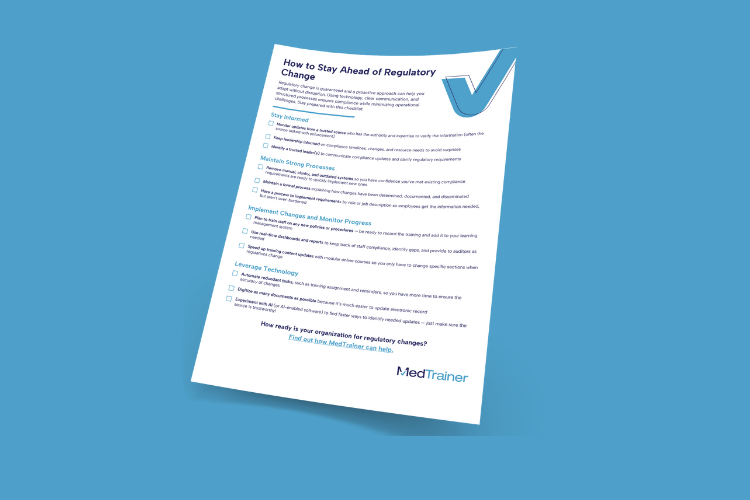
Stay ahead of regulatory change and minimize disruptions with these tips.
Remaining Compliant With Regulatory Standards in Healthcare
Training on medical care regulations and having policies that align with critical standards are essential for healthcare organizations of all sizes.
Education keeps employees well-informed about the healthcare compliance regulations and standards they need to follow in their daily operations. Using a healthcare-specific learning management system (LMS) offers peace of mind that training meets regulatory healthcare and accreditation standards and is updated as medical care regulations change. MedTrainer is home to one of the best healthcare compliance training software packages available.
Courses can cover a wide range of topics, including patient privacy, data security, patient and worker safety, and ethical considerations. Both regulatory agencies and accreditation organizations conduct surveys to ensure organizations maintain compliance. An LMS simplifies the tracking and reporting that is required.
Having policies in place further supports compliance efforts by providing clear guidelines and procedures for employees to follow. Policies serve as a roadmap, outlining the expected behaviors and actions that align with healthcare regulatory requirements. Keeping documents and policies in healthcare software from a top-rated compliance company like MedTrainer makes them easier for employees to access and easier for admins to secure electronic attestations.
See how MedTrainer can help you stay on top of healthcare compliance regulations.