 Learning
 Credentialing
 Compliance

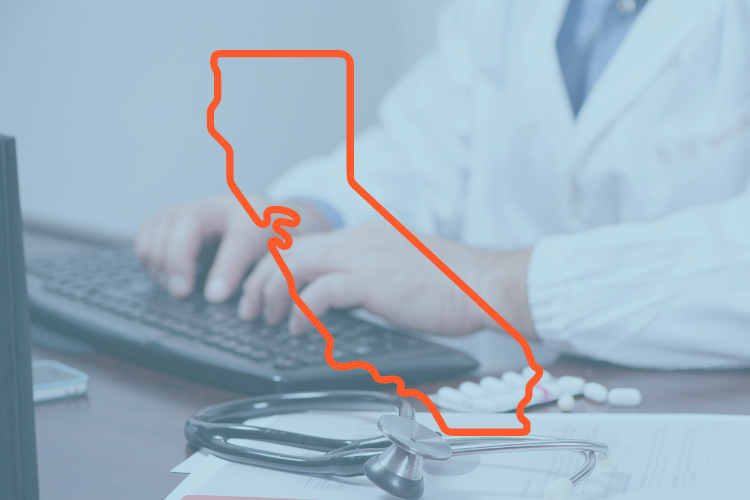
California is known for its progressive politics with a strong emphasis on social justice, environmental issues, and diverse representation. These unique characteristics influence required California training for healthcare professionals. For example, California requires all employers of five or more employees to provide training to supervisory (two hours of training) and nonsupervisory employees (one hours of training) on sexual harassment and abusive conduct prevention. California also requires all individuals who are considered mandated reporters under California law to receive training. Domestic violence training is required based on licensing.
Webinar: Navigating the Top 3 Healthcare HR Trends in 2026
MedTrainer’s healthcare policy experts often conduct state analyses of training requirements to share with customers. Included in this blog post are the results of an audit on California requirements. This list should be used as a guide and does not replace your own comprehensive analysis.
What Is Required for California Compliance Training?
Healthcare compliance training is not a one-size-fits-all solution. Requirements vary by care setting (industry), employee role, a risk assessment, and more.
The list below includes California compliance training requirements for most clinical roles:
- Combating Medicare Parts C and D Fraud, Waste, and Abuse (CMS, required if provider participates)
- Documentation Standards for Medical Records (CMS, required if provider participates)
- Understanding and Applying CMS Regulations for Use of Restraints (CMS, required if provider participates)
- The Rights of the Individual and Person Centered Care Across the Continuum (CMS, required if provider participates)
- Identification and Reporting of Critical Incidents (CMS)
- Corporate Compliance – Conflict of Interest in Healthcare
- Corporate Compliance – Identifying Misconduct and Effective Discipline
- Corporate Compliance Framework and Essentials
- DEI – Overview of Cultural Competency (California)
- DEI – The Importance of Cultural Competency in Healthcare (California)
- Cybersecurity Training and Awareness (HIPAA)
- HIPAA Fundamentals Privacy and Security Rule
- Infection Control and Prevention
- CPR and Basic Life Support (determined by licensing)
- Airborne and Droplet Diseases (OSHA)
- Bloodborne Pathogens (OSHA, California-specific)
- Confined Spaces (OSHA)
- Disaster Preparedness (OSHA)
- Ergonomics and Injury Prevention (OSHA)
- Fire Safety and Fire Extinguisher Types (OSHA)
- General Safety Orientation (OSHA)
- Preventing Needlesticks and Other Sharps Injuries (OSHA)
- Respiratory Protection for Healthcare Workers (OSHA)
- California Child Abuse Mandated Reporter Training for Medical Professionals (California)
- California Sexual Harassment Prevention Training (California)
- Substance-Use Disorder (SUD)
What To Look for in Healthcare Compliance Courses
Identifying California training required for healthcare compliance is complicated, plus regulations and standards frequently change. Here’s what you should look for when selecting healthcare compliance courses:
- California-Approved Content: If you have California facilities, you’ll want to be sure your compliance training meets the specific requirements under the law.
- Continuing Education: It is a considerable benefit to clinicians when healthcare organizations offer CE (continuing education) credits. These courses offer educational advancement opportunities within your own organization, driving greater employee satisfaction and retention. When using a learning management system like MedTrainer, many courses meet regulatory requirements and also offer CE. Look for libraries that provide CE courses accepted by state boards and nationally recognized organizations, including:
- American Academy of Professional Coders (AAPC)
- Accreditation Council for Pharmacy Education (ACPE)
- Association for Addiction Professionals (NAADAC)
- The Commission (formerly Commission for Case Manager Certification)
- American Nurses Credentialing Center (ANCC)
- American Dental Association (ADA CERP)
- American Association of Medical Assistants (AAMA)
- National Association of Long-Term Care Administrator Boards (NAB)
- National Association of Social Workers (NASW)
- California Association for Alcohol/Drug Educators (CAADE)
- California Association of DUI Treatment Programs (CADPT)
- California Consortium of Addiction Programs and Professionals (CCAPP)
- Diverse Course Blend: Choose classes created by instructional designers and subject matter experts versed in evidence-based course creation. Provide required and often hard-to-find CE courses for licensed employees.
- Role-Specific Training: Don’t assign the same training to all employees. Regulatory agencies require different training based on the healthcare worker’s role, so you should also assign training by role and care setting.
- Meeting Multiple Standards: Compliance training courses that meet multiple standards are a win-win for organizations and employees. For example, choose a disaster preparedness course that meets the OSHA and CMS emergency preparedness standards instead of requiring employees to take two separate classes.
- Go Digital: Digital platforms enhance compliance training through cloud-based access, mobile learning, and automatically updated courses. Compliance training administrators can significantly improve efficiency using automated course completion reminders, scheduled reporting, and streamlined new hire onboarding with just one click.
Benefits of Implementing a Healthcare LMS
Healthcare training software has transformed how healthcare professionals learn, practice, and refine their skills. Choosing a platform built for healthcare’s unique challenges will offer numerous advantages that enhance the learning experience and patient care outcomes.
- Accessibility: Healthcare professionals have busy and often unpredictable schedules, so choosing a platform with online classes and the ability to pause and restart is critical for these employees.
- AI-Powered Course Recommendations: Systems, like MedTrainer, offer built-in matching of requirements with their course library, based on your organization’s state and care setting.
- Continuous Updates: Top healthcare training software companies rely on subject matter experts to continuously update courses to include the latest research findings, treatment methodologies, and healthcare regulations.
- Automatic Tracking: Since healthcare organizations must be able to show regulatory and accreditation agencies proof of course completion, automated tracking is critical.
- Time Savings: Compliance professionals can dedicate more time to proactive risk management tools in healthcare without the burden of manual training programs. Download this guide to calculate your potential savings.
- Cost Savings: Save money when you no longer pause appointments for in-person training, purchase materials, or have an already busy employee track down appropriate training.
- Scalability: A healthcare LMS can easily accommodate growing numbers of learners without significant additional costs, making it suitable for large healthcare organizations and institutions.
Ready to simplify your California training? Consider MedTrainer.
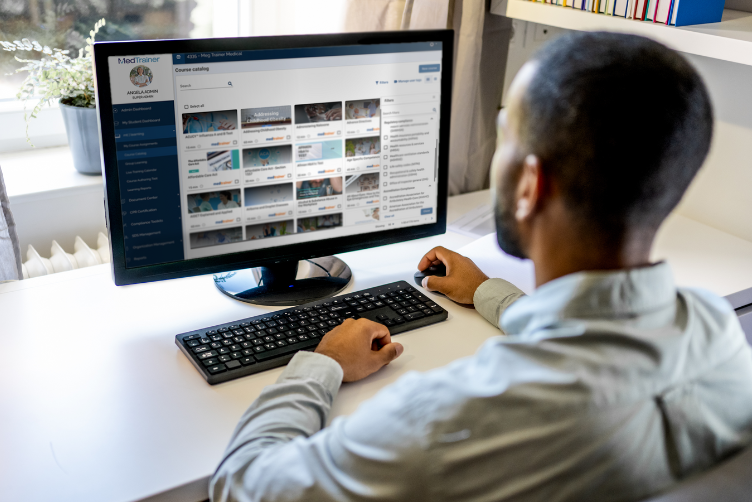
See how MedTrainer can streamline your compliance.