 Learning
 Credentialing
 Compliance

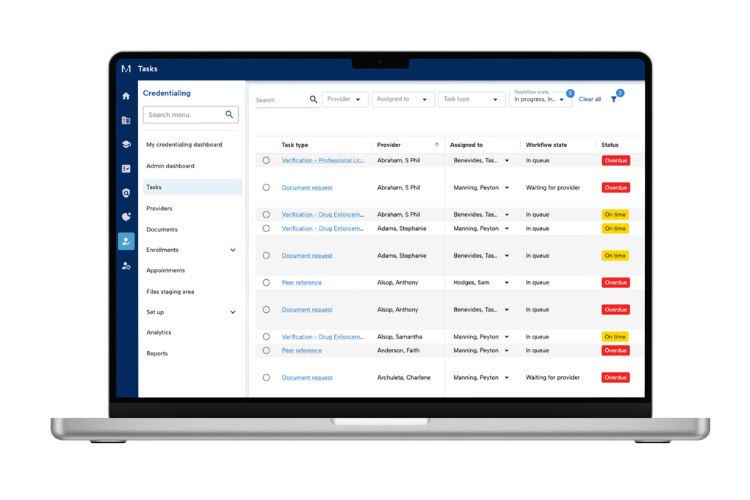
Credentialing and enrolling a single provider includes dozens, if not hundreds, of individual tasks. If just one of those tasks is not completed accurately, a healthcare organization can lose thousands of dollars in billable revenue. A single view to manage all credentialing tasks is the best way to maintain control, visibility, and accuracy. It just isn’t possible with scattered files or systems.
MedTrainer’s provider credentialing software puts all tasks in a single view so nothing gets lost, deadlines don’t slip, and your team always knows exactly where each provider stands in the process. Every task has a clear owner, a due date, and a record of what’s been done.
Whether you’re managing a handful of providers or a high volume of credentialing, centralized task management will keep teams moving work forward, instead of getting lost in the details.
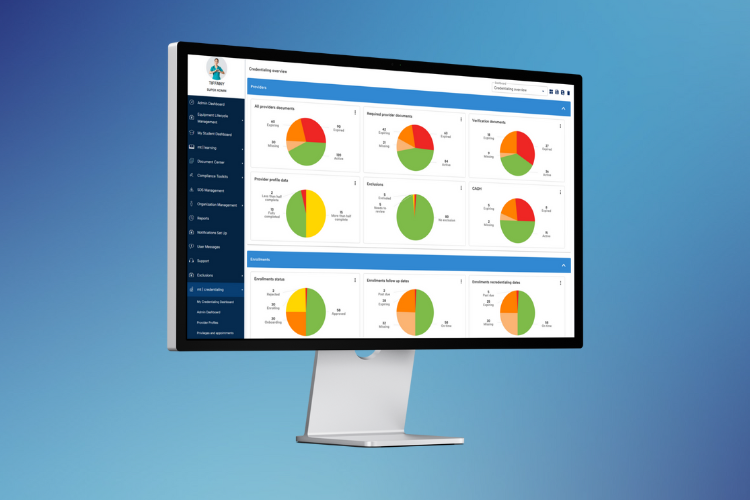
Have Credentialing Confidence, No Matter What
Benefits of Centralized Credentialing Task Management
Rather than tracking everything through provider records alone, a central task manager breaks credentialing down into clear, trackable steps. Each task is assigned, time-bound, and visible to the team. This full visibility makes it easier to see what’s moving, what’s stuck, and what’s complete without relying on manual check-ins.
- Revenue optimization opportunities. Leaders can optimize processes and improve scheduling with a clear view of credentialing status. It’s nearly impossible to plan ahead when information is fragmented.
- Bottlenecks are identified faster. Color-coded status updates and elapsed time counters make it clear which tasks take the longest or where things get stuck.
- Faster turnaround time. It’s clear who is assigned which task, so there’s no waiting around wondering who is handling the next step or when something should happen.
- Better documentation and audit trail. Everything is automatically tracked in a single location, providing everything needed for NCQA and The Joint Commission standards.
A Single Workflow for the Full Credentialing Process
MedTrainer’s task manager brings the full credentialing process into one place, covering work that has traditionally been handled across multiple systems and inboxes.
Board Approval Tasks: Board approvals can involve multiple stakeholders and a lot of back-and-forth. MedTrainer puts all Board Approval tasks in one place for faster, more effective process management. Teams can attach documents, assign approvers, and track progress through final sign-off in one place. This reduces reliance on email threads and external trackers, so teams don’t have to dig through inboxes to find status updates, while keeping a clear record for audit purposes.
DEA Verification: DEA verification is managed alongside other verification work within the Tasks framework. This brings more consistency to the process, with clearer ownership, better document organization, and less risk of duplicate records.
Peer Reference Signature Workflow: Peer reference collection can be completed entirely within MedTrainer. Forms can be sent, signed digitally, and automatically stored in the provider record. No external tools, no manual uploads, and fewer delays.
Board Certification Verifications: Primary source verification for board certifications is tracked and documented within Tasks, with clear ownership and deadlines to keep the process on schedule.
Professional License Verifications: License verifications are managed alongside other credentialing work, making it easier to track status, store documentation, and maintain an audit-ready record.
Document Requests: Document collection is built into the workflow, so teams can request, receive, and store credentialing documents without relying on email or external file sharing.
Peer Reference Tracking: Track the status of peer references from outreach through completion, with full visibility into where each request stands.
National Practitioner Data Bank (NPDB) Verifications: NPDB queries are tracked and documented within Tasks, giving teams a clear, centralized way to manage query status, store results, and maintain an audit-ready record.
Drug Enforcement Administration (DEA) Verification: DEA verification is managed within Tasks alongside other verification workflows, helping teams maintain consistent processes, organize documentation, and reduce the risk of duplicate or missing records.
All of these workflows live in the Task Table, where teams can see credentialing activity across providers, including ownership, deadlines, priority, and key details like specialty and certifying board. Every step has a clear owner, a due date, and a record of what’s been done.
A Unified View of Credentialing Workflows
Bringing approvals, verifications, and document collection into one place helps reduce fragmentation across credentialing work.
Teams spend less time tracking down updates and more time moving things forward. Organizations gain clearer accountability, more consistent processes, and stronger audit readiness. For teams evaluating credentialing solutions, it offers a more practical and scalable way to manage complex workflows.