 Learning
 Credentialing
 Compliance
From medicines to equipment, there’s a long list of costs that make the healthcare industry expensive to manage. One expense that some organizations are incredibly familiar with — and maybe wish they weren’t — is the cost of physician credentialing.
Healthcare provider credentialing is crucial for the success of organizations, but it can push an already strained budget to the brink. Credentialing can put money in your pocket, but the old adage also strikes true: it takes money to make money. So how much does physician credentialing cost? And can a reliable healthcare credentialing software solution save money?
Preserve your revenue by speeding up your enrollment process. Watch the on-demand webinar.
What Is Medical Credentialing?
Medical credentialing is the rigorous procedure of verifying that a physician possesses the necessary qualifications and experience to perform their job competently and safely. The healthcare credentialing process involves many steps, including:
- Primary source verification ensures that a physician’s educational and training credentials are authentic and up-to-date.
- Exclusion checks verify the physician is not on government or industry exclusion lists for prior malpractice.
- Payer enrollments are necessary so that a physician is approved to provide services to patients covered by various health plans.
- Privileging is when a physician has permission to perform specific medical procedures or services.
- Recredentialing is the periodic renewal of credentials for ongoing compliance with regulatory and quality standards.
By completing these steps, hospitals and healthcare institutions can have confidence that they’re working with qualified and competent physicians who meet the highest standards of patient care.
However, it’s worth noting that medical credentialing services can be time-consuming and expensive. It’s why many organizations turn to some of the highest-rated physician credentialing software, like MedTrainer, to help streamline and optimize the process. As one of the best healthcare credentialing companies, MedTrainer is often relied on by organizations that need to control costs for healthcare credentialing.
The Costs of Not Credentialing Physicians
If you’ve ever found yourself buried in files and multiple Excel spreadsheets while working on physician credentialing, you might’ve wondered whether it’s worth all the effort and costs. However, once you learn that failing to thoroughly credential physicians can have serious consequences that far outweigh the time and money involved in the process, it’s easier to see its necessity.
Risk of Fines and Legal Penalties
Under “incident to” rules, there are different standards for billing across payers and states, and even a small error can lead to costly fines and additional work.
Inexperienced Physician Errors
New doctor mistakes cost the facility both in terms of damages and reputation. Proper physician credentialing protects every party involved.
Risk of Hiring Excluded Physicians
The Office of Inspector General for the Department of Health and Human Services maintains a list of individuals and entities excluded from federally funded healthcare programs, including those convicted of Medicare or Medicaid fraud.
The question is not whether to credential, but rather how to do it effectively. Organizations trust MedTrainer as one of the best credentialing software platforms nationwide. Using MedTrainer’s physician credentialing software is proven to improve speed and accuracy while protecting your organization’s high standards of patient care. All while reducing costs.
What are the Costs of Physician Credentialing Delays?
In the process of healthcare credentialing, time is of the essence. Every day without proper credentialing means losing revenue for the provider and the organization. Moreover, the longer it takes to complete the process, the higher the risk of losing high-caliber providers. Physician credentialing software helps streamline this process and lower costs.
Manual medical credentialing services can take around 180 days. Here’s how it breaks down:
- 30-60 days for location onboarding and provider document acquisition
- 90-180 days for initial primary source verification and initial OIG exclusion check
- ~4-8 hours uninterrupted per provider/payer to complete payer enrollment, facility privileging, provider profile management, CAQH profile management, payer calls, and payer market research
Manual credentialing is far more time-consuming and prone to errors than automated systems. Using software from a top-rated healthcare credentialing company like MedTrainer can help organizations reduce their physician credentialing costs by an average of 50%! More importantly, MedTrainer customers can credential providers three weeks faster, on average.
Get secrets to speed up your credentialing process.
The Costs of Credentialing Methods
Healthcare credentialing is a vital task for healthcare organizations, and the costs associated with it can vary depending on several factors, including:
- Current credentialing status
- Number of physicians
- The growth rate of the practice
- Number of payers to be enrolled with
- Changes in insurance contracts or providers
- Other services provided by the credentialing provider
On average, the cost of physician credentialing is approximately $2,000-$3,000 per year. Here’s a breakdown of the costs associated with individual pieces of the healthcare credentialing process:
- Individual medical credentialing costs between $100-$200 per physician. Most insurances and facilities require recredentialing every two years, which may vary.
- The CAQH ProView database is an option for online provider data collection. The initial setup cost is $200-$500, and basic database management can cost around $50-$100 per month, depending on the level of involvement from the credentialing provider.
- Insurance panel applications usually cost around $100-$200.
These costs add up fast; however, they’re nothing compared to the costs that can accompany the fines and fees following the mistakes of an uncredentialed physician.
In-House Credentialing
Many organizations choose to keep medical credentialing in-house using a team of professionals. This can give the organization more control over the credentialing timeline, but often, an organization’s credentialer also has many other responsibilities vying for their time. If you expect someone to manage credentialing, as well as scheduling, billing, negotiating contracts, human resources, or other responsibilities, it may come with a price, given the time-consuming and demanding nature of credentialing.
According to Salary.com, the average medical staff credentialing specialist salary in the United States in 2023 is $43,558. Depending on the number of providers, locations, and payers, you may need to hire multiple specialists and support staff. Remember to also factor in office space, equipment, benefits, training, retention, and replacement costs.
Why the Best Healthcare Credentialing Software Can Help
You don’t need medical credentialing services near you when cloud-based physician credentialing software offers the ability to manage unlimited provider data online, in one platform. The best credentialing software also offers automated workflows (such as verifications, enrollments, and privileging) to keep the process on track. These time-saving automations, combined with automatic reminders and all credentialing data in one place, can reduce credentialing timelines by up to 50%.
While you will pay for the software, your credentialers will be able to get more accomplished in less time, so you may actually save money if your providers are credentialed and enrolled with payers more quickly. And when choosing one, MedTrainer is often known for delivering the best approach to healthcare compliance and credentialing.
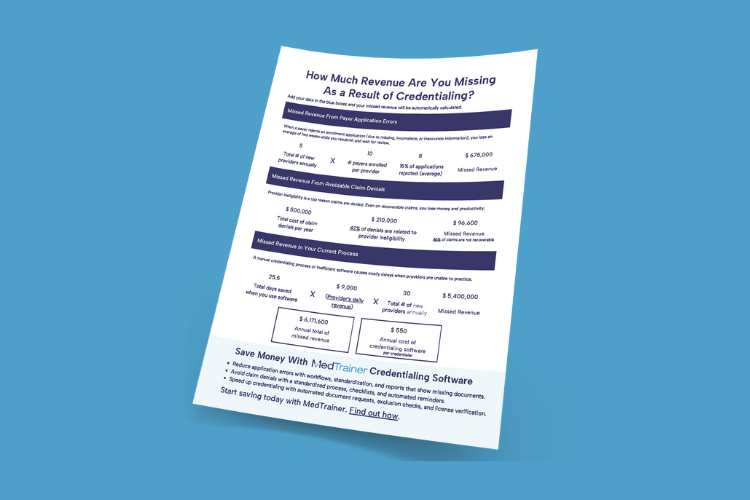
Find out how much revenue your provider credentialing process is losing.
Outside Credentialing Service
Outsourcing credentialing services means that a third-party service takes care of all (or most) credentialing tasks, including primary source verification, payer enrollments, facility privileging, and recredentialing, among other things. This option may seem like the highest cost at first, but be sure to consider all employment costs of having someone in-house, and consider the speed with which a team of outside credentialing specialists can work.
There are many benefits to outsourcing credentialing services, including:
Time-Saving
The credentialing process can be incredibly time-consuming. Outsourcing local medical credentialing services frees up time and resources for healthcare organizations to focus on core business functions.
Reduced Errors
Third-party credentialing services have dedicated staff and technology that can help reduce the risk of errors and improve the accuracy of the credentialing process.
Cost-Effective
Outsourcing medical credentialing services can be cost-effective in both time and money. Third-party services can reduce the time and money spent on credentialing.
Compliance
Outsourcing healthcare physician credentialing services can help organizations comply with state and federal regulations.
Access to Expertise
Third-party credentialing services often have experts knowledgeable about the latest standards and best practices.
Choosing the Right Option for Your Healthcare Organization
There’s no “best” method of credentialing providers, although it’s not advisable to try managing the process using paper and spreadsheets. It comes down to what will work best for your organization.
If you are hiring providers faster than you can credential, it may be worth paying a premium to get those healthcare professionals in front of patients faster. But if you’ve got a great team in-house and they need a little help, MedTrainer’s software could be your best bet to lower the cost of credentialing.
MedTrainer can help, no matter what you decide. See for yourself.