 Learning
 Credentialing
 Compliance

Staff at community health centers (CHCs) and federally-qualified health centers (FQHCs) need to be ready for anything, which often means additional — and evolving — compliance training requirements. The Federal Tort Claims Act (FTCA) coverage offers important protections for healthcare professionals working in federally funded health centers, but in order to maintain this protection, organizations must adhere to additional requirements, including specific training. Since there’s a new Program Assistance Letter (PAL) every year that designates changes for deemed organizations, these requirements can change frequently.
This article will explore key strategies and best practices for staying on top of FTCA training, from understanding the latest compliance updates to implementing role-specific educational programs that ensure all staff are equipped with the knowledge they need to navigate the complexities of the FTCA. By staying proactive, healthcare organizations can mitigate risks, enhance patient care, and maintain their eligibility for FTCA coverage.
See a complete list of training requirements for community health centers.
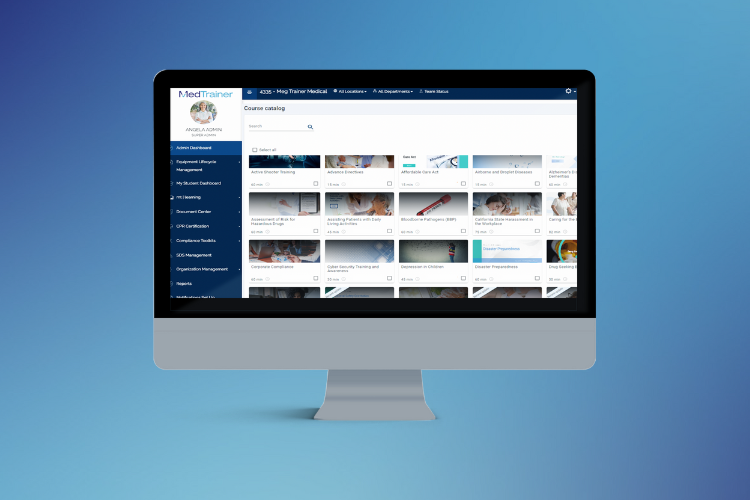
All the Courses You Need, All in One Place — That's MedTrainer Learning.
FTCA Training Requirements
FTCA requires health centers to develop and implement an annual risk management in healthcare training plan for all staff members. The plan must be submitted as part of the deeming or redeeming application and proof of training completion is required, including course title, topic area, brief description, and date of training. At a minimum, the plan should incorporate specific training for groups of providers that perform various services which may lead to potential risk (for example, dental, pharmacy, family practice). HRSA noted that one of the most common areas of non-compliance in CY2022 was related to the annual risk management training plan and ensuring trainings were documented through a tracking and documentation tool, like MedTrainer.
Obstetrics Risk Assessment
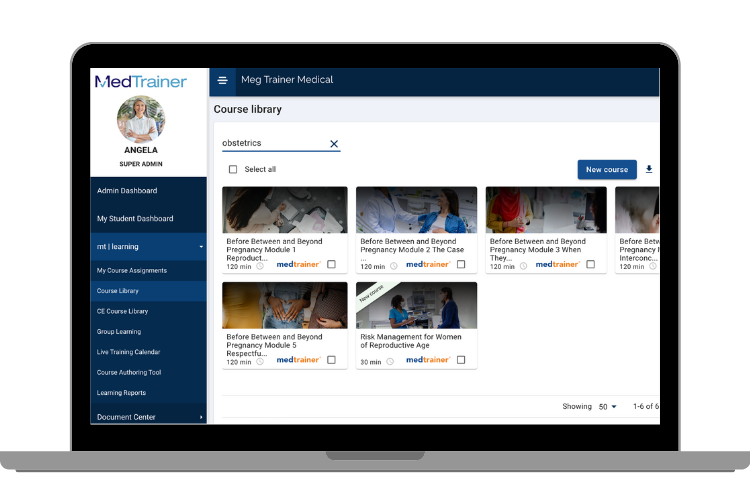
Starting with the CY 2024 deeming application, additional obstetrics training is required for all staff who have contact with reproductive-age patients, even if the center doesn’t offer obstetrical services. This training must also be included in the health center’s risk management training plan.
All required OB training must be specific to the provider’s discipline. The health center should consider each staff member’s role, responsibilities, and their level of clinically related contact with patients of reproductive age in determining the employee’s specific training needs. The health center must clearly document which staff members are required to complete OB training and the process used to determine inclusion or exclusion from the OB training requirement.
MedTrainer offers “Risk Management for Women of Reproductive Age,” and “Overview of Sexual and Reproductive Health,” which both satisfy the FTCA requirement and provide a higher level overview of the importance of tailored care for this population.
Infection Control
Required training includes infection control and sterilization, both in general and on the facility and/or organization’s processes. HRSA and OSHA both also require training in infection control, hand hygiene, and vaccinations for adults, so ideally you are able to provide one training on each topic that meets all guidelines. MedTrainer offers the following courses that satisfy those requirements:
- Infection Control and Prevention (in multiple care settings)
- Hand Hygiene
- Vaccinations for Adults
Employees are also required to receive training on organization-specific procedures, for example, blood borne pathogen exposure protocol, infection prevention and control policies, hand hygiene expectations, and dental equipment sterilization. Choosing a healthcare learning management system that enables you to upload video recordings simplifies this requirement – just record the initial training provided and then assign to all new hires through the LMS.
HIPAA
FTCA training also includes Health Insurance Portability and Accountability Act. Like with infection control, a well-designed course can meet both the HSS and HRSA requirements. MedTrainer offers more than 20 courses covering topics ranging from privacy and security to the breach notification rule and social media. Learn more about MedTrainer Learning.
Areas of Risk
Deemed health centers must identify areas or activities of highest clinical risk for their center and include FTCA training on these. These risks could include homelessness, food insecurity, and susceptibility to certain diseases. Employees who are trained to look for indicators and appropriately manage these risks will help to keep themselves and those around them safe.
Why Use an LMS for FTCA Training
FTCA deemed health centers face greater scrutiny and are held to higher tracking and reporting standards. This is why many choose healthcare-specific learning management systems to ensure compliance – and funding. Here are some of the benefits of using a Learning Management System (LMS) for FTCA training:
Customizable tracking and reporting: Dashboards surface potential gaps and offer real-time status and progress of all training. Customizable reports give you the confidence that you have the information that will be needed during a HRSA operational site visit.
Automated reminder emails: Ensure all employees complete the required FTCA training with automated email reminders that continue until assigned training is finished.
Assign courses in bulk: Using an LMS, such as MedTrainer, it is easy to assign courses to groups of employees by role so you can ensure everyone gets training based on their discipline.
Training updated for you: MedTrainer’s research team reviews all regulatory requirements multiple times per year and uses an in-house team to quickly update courses. For example, when the obstetrics requirement was added in CY 2024, MedTrainer had an approved course very quickly. Since it’s easy to search or sort by regulatory agency, you can always find the latest courses to meet your health center’s needs.
See how MedTrainer Learning can streamline required FTCA training.