 Learning
 Credentialing
 Compliance
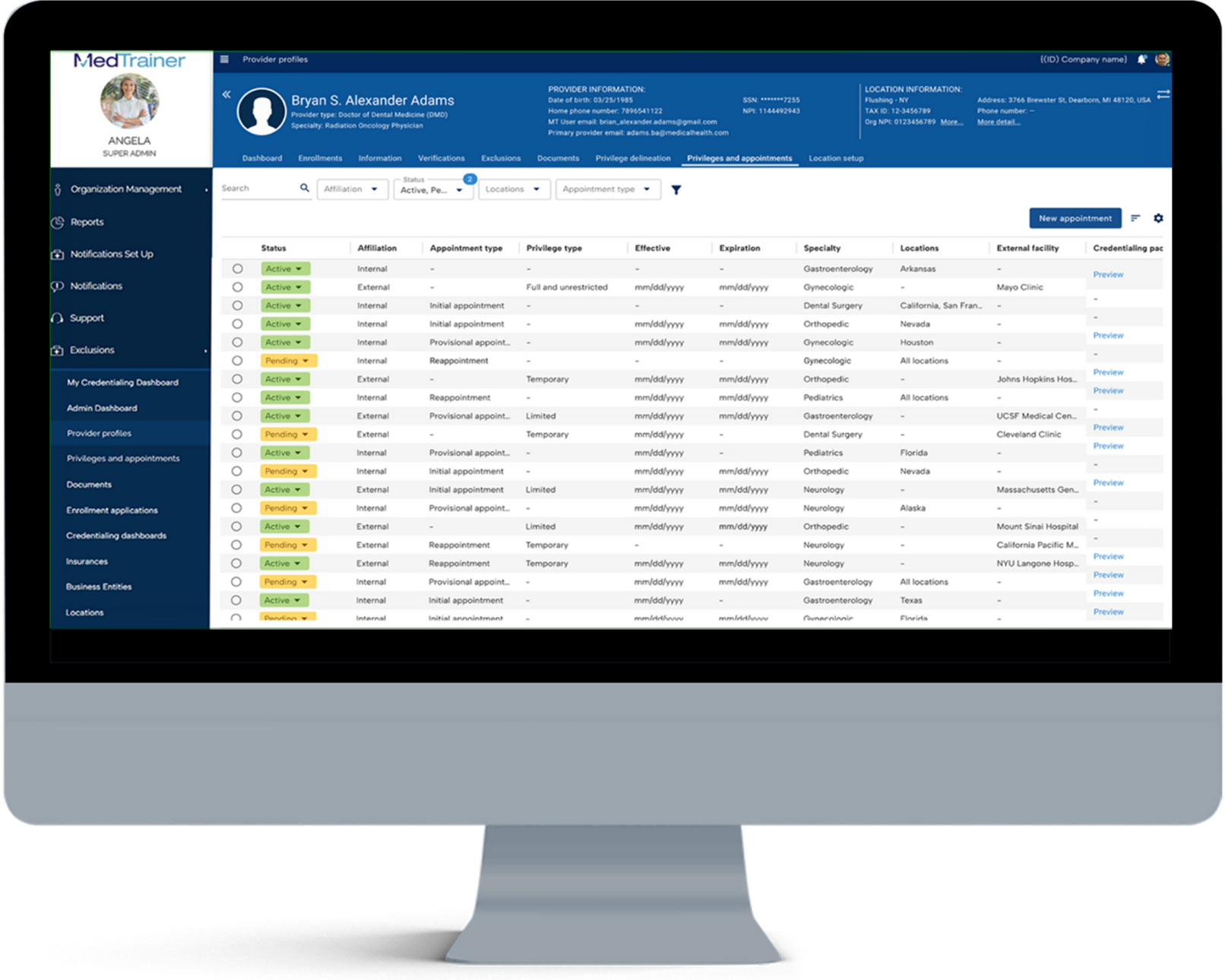


MedTrainer automates hospital privileging end-to-end with electronic forms, e-signatures, and auto-fill. Customize and standardize the process to reduce errors and wasted time. Privileging automation in MedTrainer’s healthcare credentialing software accelerates completion of tasks across departments and facilities.
How MedTrainer Simplifies Provider Privileging
- Streamlined Hospital Privileging
- Generate Credentialing Packets Instantly
- Centralized Management in Provider Privileging Software
- Automated Forms
Streamlined Hospital Privileging
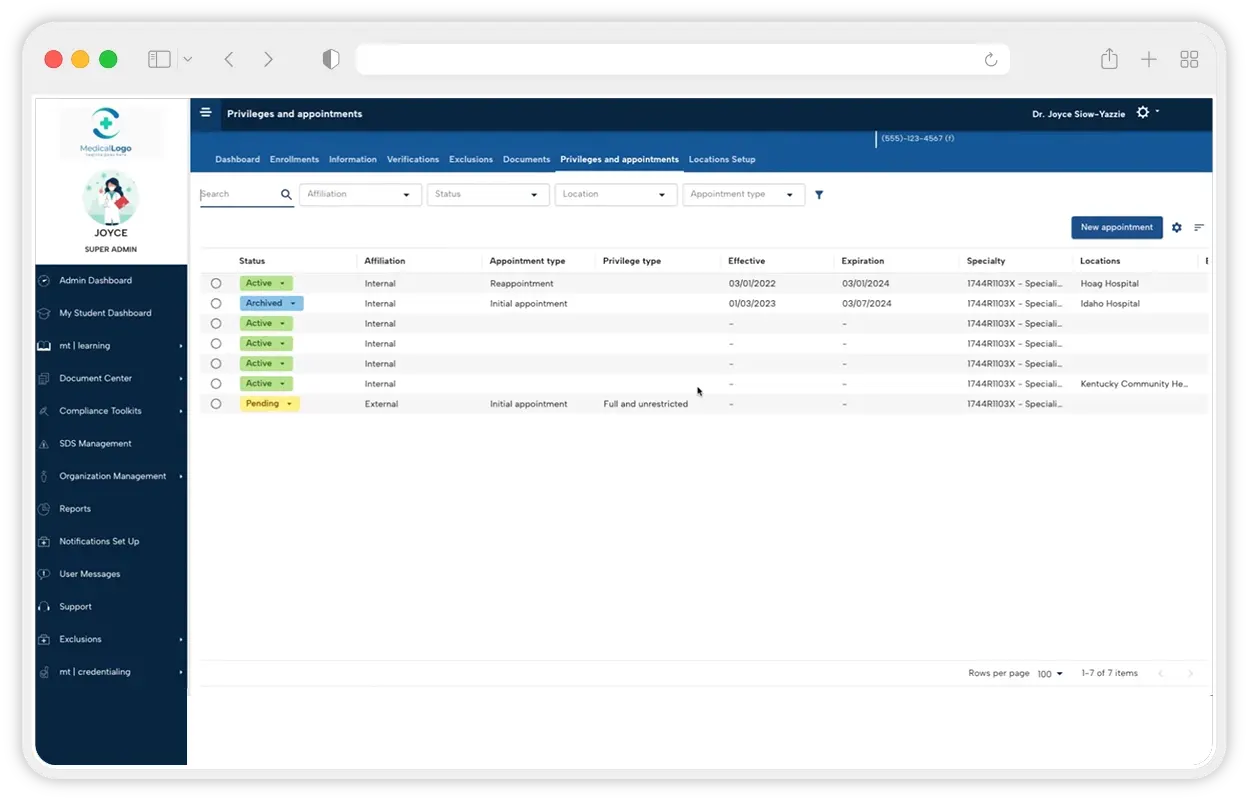
MedTrainer automates hospital privileging end-to-end with electronic forms, e-signatures, and auto-fill. Customize and standardize the process to reduce errors and wasted time. Privileging automation in MedTrainer’s healthcare credentialing software accelerates completion of tasks across departments and facilities.
Generate Credentialing Packets Instantly
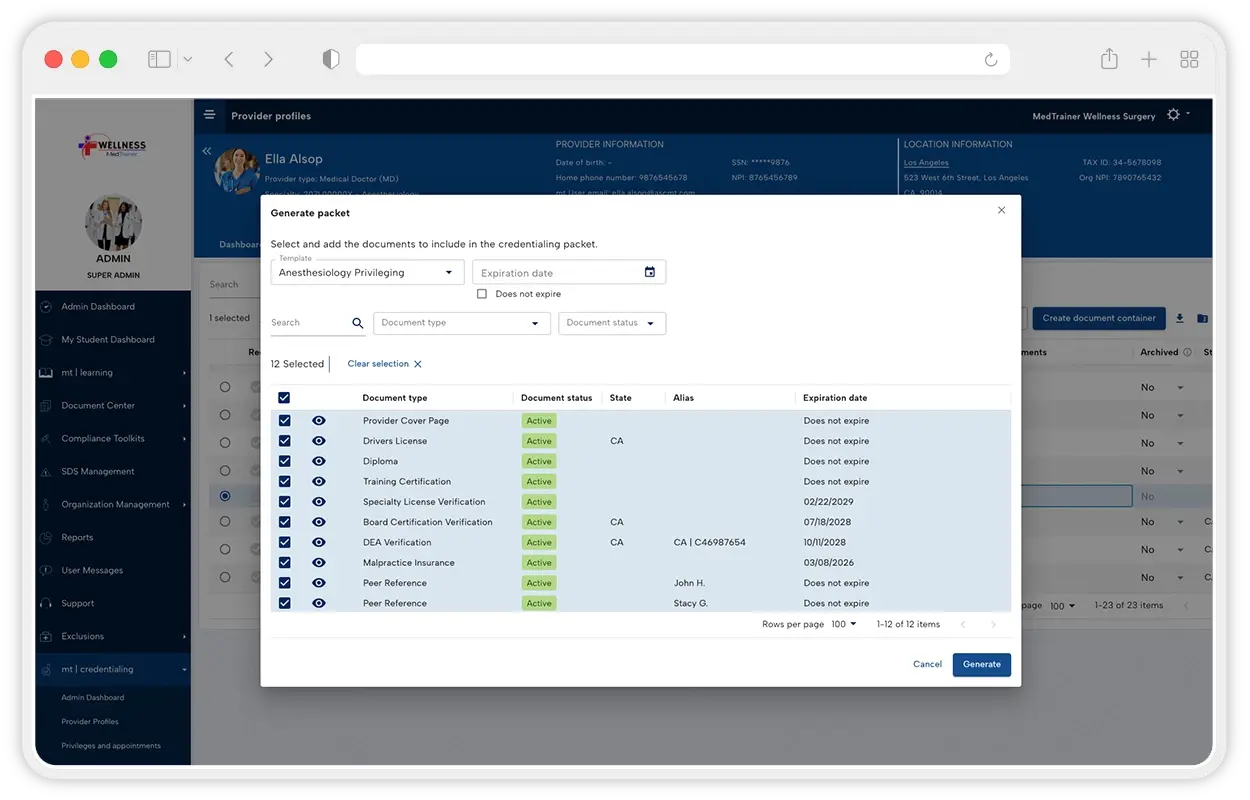
Build packets by provider type or site in seconds. MedTrainer’s healthcare provider privileging software automatically compiles required documents, fills data from profiles, and keeps packets current — reducing duplication, improving accuracy, and moving privileging forward without delays.
Centralized Management in Provider Privileging Software
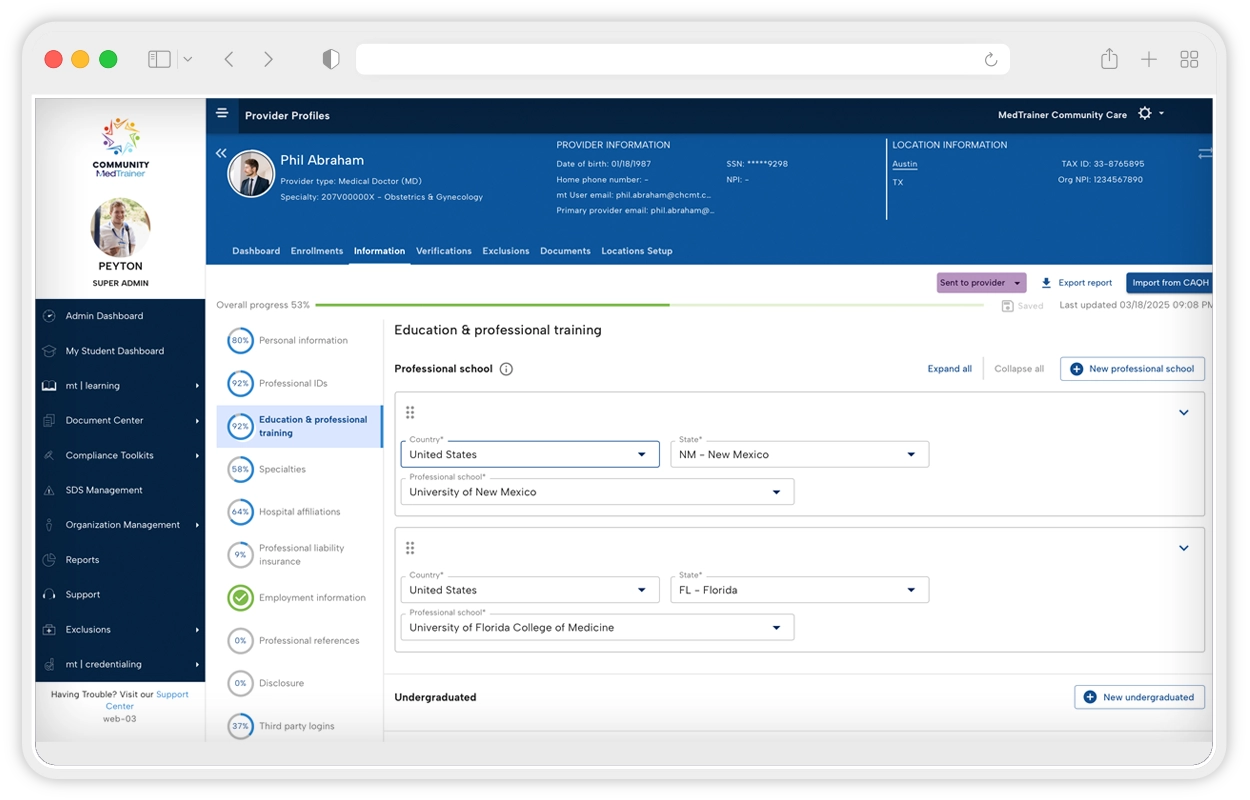
Track hospital and internal privileges by provider or site with customizable reports. Store documents, monitor expirations, and automate reminders in one privileging software to keep current and audit‑ready for leaders and surveyors.
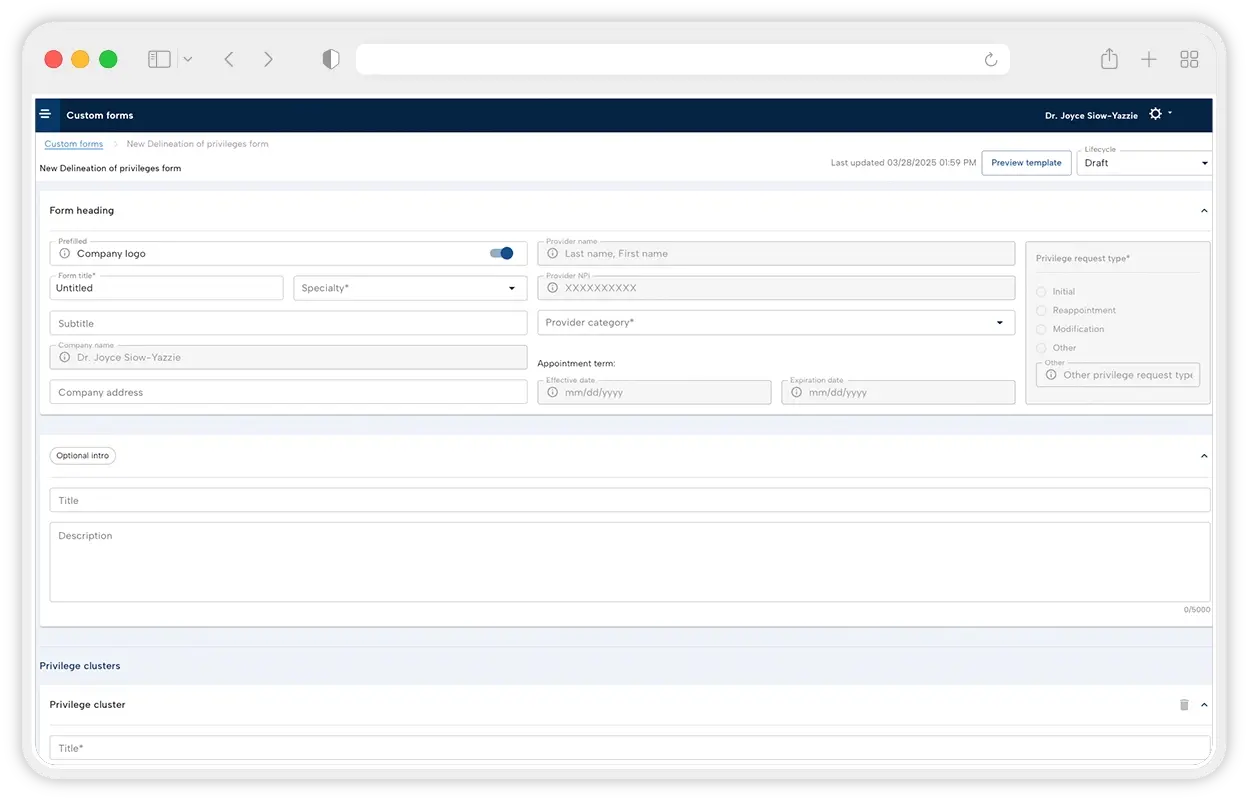
Automated Forms
Use a simplified healthcare provider privileging software with auto‑fill and auto‑extract for hospital, ASC, and delineation of privileges (DOP) forms. Reduce redundant data entry and speed completion without sacrificing accuracy or healthcare compliance.
Streamlined Hospital Privileging
Generate Credentialing Packets Instantly
Build packets by provider type or site in seconds. MedTrainer’s healthcare provider privileging software automatically compiles required documents, fills data from profiles, and keeps packets current — reducing duplication, improving accuracy, and moving privileging forward without delays.
Centralized Management in Provider Privileging Software
Track hospital and internal privileges by provider or site with customizable reports. Store documents, monitor expirations, and automate reminders in one privileging software to keep current and audit‑ready for leaders and surveyors.
Automated Forms
Use a simplified healthcare provider privileging software with auto‑fill and auto‑extract for hospital, ASC, and delineation of privileges (DOP) forms. Reduce redundant data entry and speed completion without sacrificing accuracy or healthcare compliance.
What Our Customers Are Saying
100%
All MedTrainer Credentialing customers with 600+ employees say privileging is faster.
3 weeks
On average, MedTrainer saves its customers 3 weeks a year on credentialing tasks.
93%
On average, 93% of MedTrainer Credentialing customers say primary source verifications and exclusions are faster.
Benefits
Only pay for what you need and not a dollar more.
Built-in signature workflows for approvals means providers can start earning sooner.
Monitor the real-time status of applications across facilities to ensure procedures stay on schedule.
Speed up the process with internal and external privileges in a single provider profile view.
Reduce the administrative burden with instantly generated credentialing packets.
See how MedTrainer's AI-enhanced workflows blend healthcare expertise with advanced technology.
"We are quite happy with MedTrainer's recredentialing service and find the customer support very helpful. We love the way our records are maintained."

"Using MedTrainer helps us focus on other aspects of our clinic by cutting down on time needed for our credentialing. I would recommend MedTrainer, as they have a great team who is quick to respond to any issues or questions that may come up at any given time."
"Our organization has been using MedTrainer for almost two years now, and it's truly a one-stop shop for your learning management system, credentialing, and compliance needs. This is the perfect asset for businesses within the healthcare and wellness industry."
"It will save me a lot of time in organizing our staff training records and licensure/certification information — things I used to have to maintain on a ridiculously large excel spreadsheet."
See how much you can save on provider privileging. Request a demo today.

Resources



Compliance, Credentialing, Learning
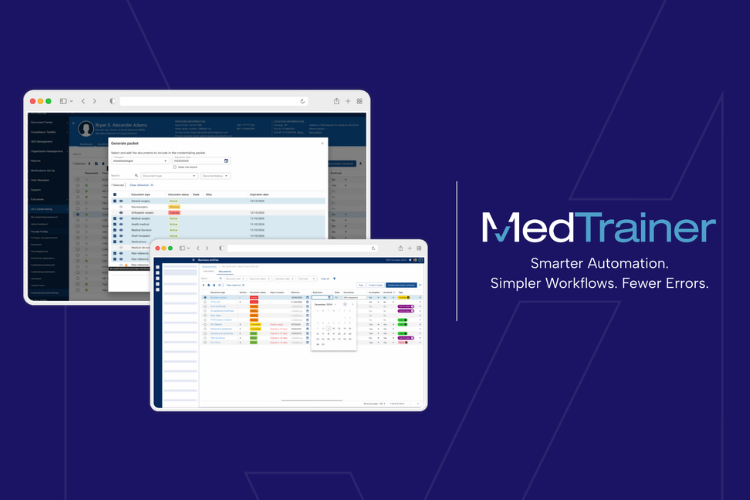
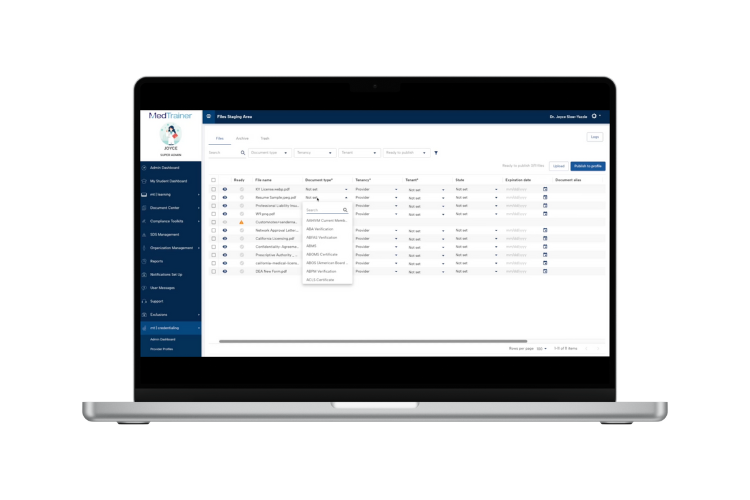
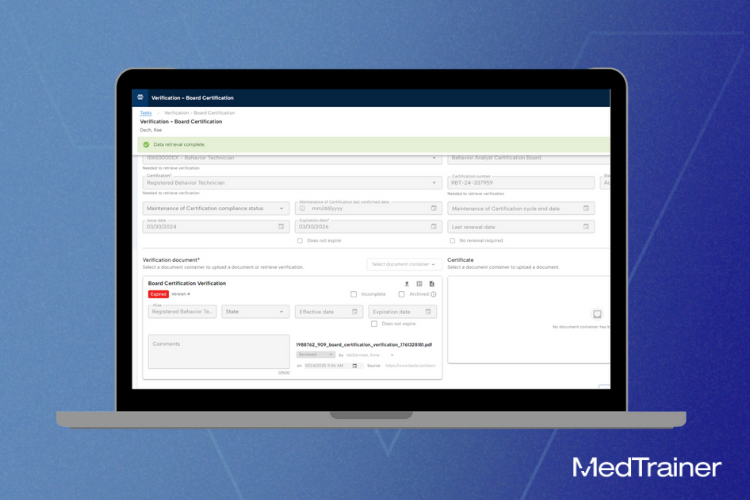
MedTrainer’s Rapid Innovation Sets a New Standard for Healthcare Compliance and Credentialing Technology






Compliance, Credentialing
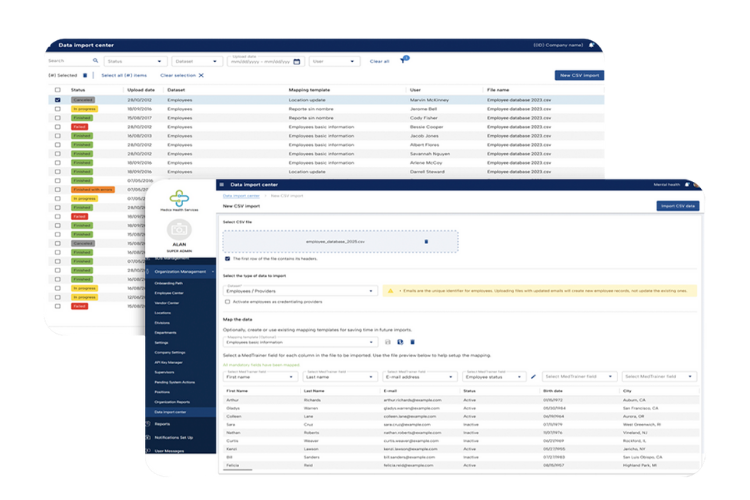
Implementing MedTrainer Is Seamless With the Data Import Center







Credentialing
The Benefits of CAQH Credentialing Automation

Credentialing
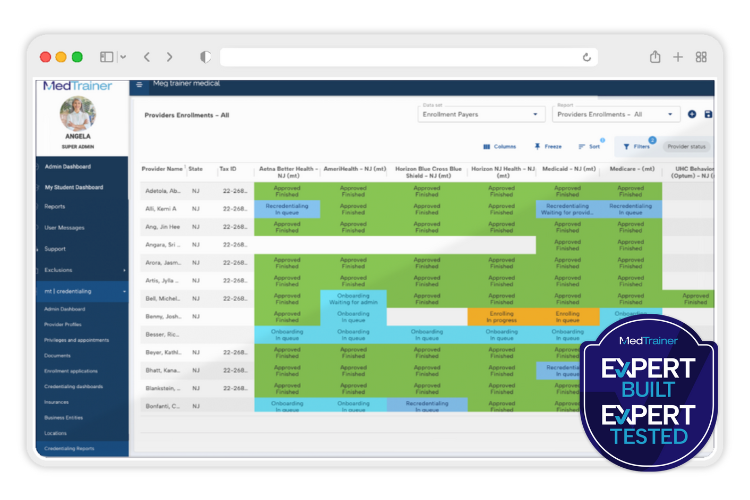
Getting Immediate Value From Credentialing Software


Credentialing
Conquering The Provider Enrollment Process

Compliance, Credentialing
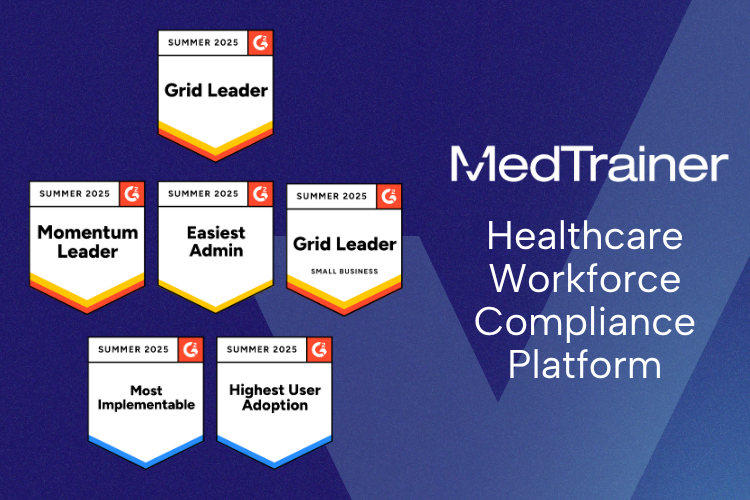
G2 Summer 2025 Reports: MedTrainer Continues Category Leadership With AI, Integration, and Impact











Credentialing
Managing the Summer Credentialing Surge









Compliance, Credentialing, Learning
5 Biggest Challenges To Onboarding Healthcare Professionals

Compliance, Credentialing, Learning
MedTrainer’s Continuous Innovation Results in Nearly 100 Product Enhancements in 2024


Credentialing
Understanding the Value of the CPMSM Certification

Credentialing
DEA Verification Change Resulting in Non-Compliance

Credentialing
Crucial Need for NPDB Credentialing


Credentialing
The Best RFP Template For Credentialing Software


Compliance, Credentialing
Understanding the Privileging Process in Healthcare

Compliance, Credentialing, Learning
Save Time With Healthcare Onboarding Software

Credentialing
Choosing the Best Healthcare Credentialing Software

Compliance, Credentialing, Learning
MedTrainer Wins Three Spring 2024 Digital Health Awards For Website & Editorial Excellence

Compliance, Credentialing, Learning
G2 Summer 2024 Reports: MedTrainer Is the Comprehensive Compliance Solution



Credentialing
Tips To Streamline Multi-State Credentialing


Credentialing
Medical Credentialing Services in Texas
Credentialing
Medical Credentialing Services in Oklahoma

Credentialing
Solutions To Speed Up Insurance Provider Enrollment


Credentialing
Using Medical Credentialing Services in New York

Credentialing
Medical Credentialing Services in Florida
Credentialing
Navigating Mental Health Credentialing

Credentialing
UnitedHealthcare Provider Enrollment: What To Expect

Credentialing
BCBS Provider Enrollment: What To Expect

Credentialing
Aetna Provider Enrollment: What To Expect

Credentialing
Save Your Sanity With Cloud Credentialing Software


Compliance, Credentialing
HRSA Credentialing: Master the Operational Site Visit

Credentialing
Dental Credentialing From Application To Approval

Credentialing
Arizona Healthcare Payer List for Providers

Credentialing
Texas Healthcare Payer List for Providers
Credentialing
New York Healthcare Payer List for Providers
Credentialing
California Healthcare Payer List for Providers
Credentialing
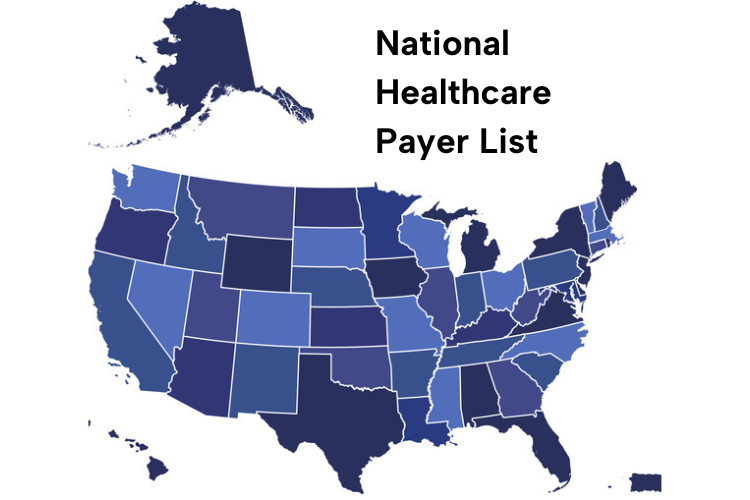
National Healthcare Payer List for Providers

Credentialing
How I Complete Healthcare Privileging in 30 Days


Credentialing
Tackle the Unique Aspects of ASC Credentialing

Credentialing
Learn How to Master Telehealth Credentialing

Credentialing
Mastering FQHC Credentialing for the Future

Credentialing
Tackling Healthcare Credentialing Challenges


Compliance, Credentialing, Learning
MedTrainer Retains #1 Healthcare Compliance Software Ranking By G2
Credentialing
Mastering Urgent Care Credentialing



Credentialing
Cigna Provider Enrollment: What To Expect


Credentialing
Privileges and Credentialing Aren’t the Same

Credentialing
Getting Credentialed with Insurance Companies

Credentialing
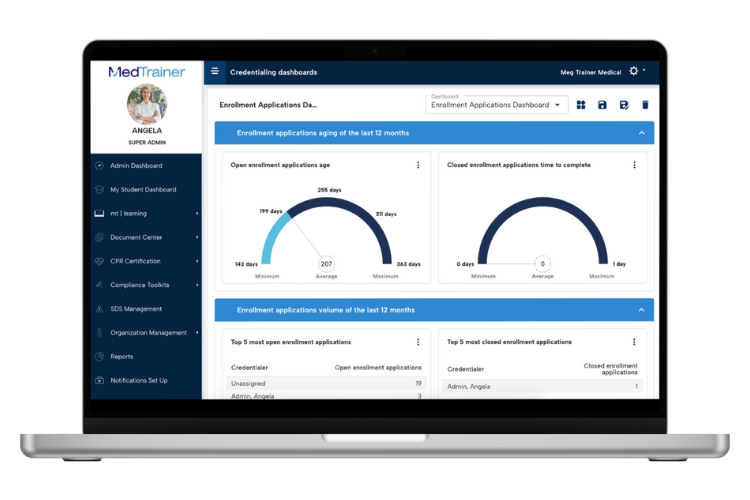
Get Enhanced Credentialing Reporting With MedTrainer
Credentialing
Modio Health: Limitations and Alternatives
Credentialing
The Importance of Insurance Credentialing

Credentialing
How Long Does CAQH Credentialing Take?

Credentialing
Are Provider Enrollment and Credentialing the Same?

Compliance, Credentialing
What are Mitigating Circumstances in Healthcare Compliance?


Credentialing
Understanding Physician Credentialing Services Cost



Credentialing
Checklist: Choose the Best Credentialing Software


Credentialing
Medical Credentialing Services in New Jersey



Credentialing
What Is Delegated Credentialing? The Pros and Cons


Compliance, Credentialing
How a Government Shutdown Impacts Your Healthcare Business


Credentialing
What Is the Purpose of Credentialing in Healthcare?

Credentialing
Using Medical Credentialing Services in California

Credentialing
Medical Credentialing Services in Colorado

Credentialing
Medical Credentialing in Washington State
Credentialing
What Is CAQH Credentialing?




Credentialing
The Benefits of Provider Credentialing Software

Credentialing
How To Avoid Negligent Credentialing in ASCs

Compliance, Credentialing
What Is a Managed Care Organization (MCO)?

Credentialing
How Long Does It Take To Credential a Provider?

Credentialing
What Is Provider Credentialing?

Credentialing
What Is the Credentialing Process?

Compliance, Credentialing
Spotlight on the Importance of Medical Credentialing


Credentialing
What Is a Credentialing Specialist?

Credentialing
The Importance of Healthcare Credentialing Software

Compliance, Credentialing, Learning
MedTrainer Unveils New Brand With Commitment To Streamline Healthcare Compliance
Compliance, Credentialing, Learning
Mastering Telehealth Compliance in the Post-Pandemic Era



Credentialing
Average Cost To Credential a Physician Provider

Credentialing, Learning
What’s New, Product Updates
Compliance, Credentialing, Learning
5 Major Digital Trends Shaping Healthcare Compliance



Compliance, Credentialing, Learning
MedTrainer Announces $43 Million Series B Funding

Compliance, Credentialing, Learning
Accreditation: What Is It and How Can MedTrainer Help?

Compliance, Credentialing, Learning
MedTrainer Rebrands Healthcare Products
Compliance, Credentialing
MedTrainer Partners with MediGroup Physician Services
Compliance, Credentialing
ASC Podcast Features Credentialing, Accreditation, Compliance, and Training Insights From MedTrainer

Credentialing
4 Tips for Credentialing in a Private Practice


Compliance, Credentialing
MedTrainer Gains Traction as Healthcare’s Leading Choice for Long-Term Credentialing Management
Compliance, Credentialing, Learning
Maximizing Compliance and Reducing Risk: The Advantages of a Comprehensive Healthcare Compliance Solution

MedTrainer is the #1 choice for Healthcare Compliance Software according to G2 reviews.
See it in Action
Frequently Asked Questions: MedTrainer Provider Privileging Software
What is provider privileging software?
Provider privileging software centralizes, organizes, and automates the process of granting clinical privileges to healthcare providers. Instead of digging through folders, tracking notes in spreadsheets, or wondering if a form is the “latest version,” everything lives in one simple, organized place. Strong healthcare privileging software helps you build, update, and approve privilege requests without the usual runaround. It standardizes your process, keeps everyone on the same page, and reduces all the little errors that slow things down. With built-in privileging automation, teams can eliminate repetitive admin work and speed up committee reviews. The result is a streamlined privileging experience that helps providers start practicing sooner and gives credentialing teams confidence that nothing will fall through the cracks.
How does MedTrainer’s provider privileging software help streamline the approval process?
MedTrainer simplifies the privileging approval process by replacing manual steps with automated workflows and real-time visibility. Our provider privileging software compiles fully customizable privileging packets automatically, flags missing information, and organizes every required document in one place so committees can review without delay. Automated reminders keep tasks moving, while built-in credentialing dashboards show exactly where an application stands – from request to final approval. Because privileging automation eliminates back-and-forth emails and file chasing, credentialing specialists spend less time on administrative cleanup and more time driving providers toward approval. Combined with standardized forms and auto-population from provider profiles, MedTrainer removes the bottlenecks that traditionally slow down hospital privileging, creating faster turnaround times and cleaner, more complete packets.
Can privileging workflows be customized by specialty or certification requirements?
Yes! With MedTrainer, you can customize privileging workflows down to the specialty, certification, location, or procedure type so every provider gets a process tailored to their specific clinical role. If a cardiologist, CRNA, and behavioral health provider each require different documents and approval steps, you can build templates that reflect those needs without creating extra manual work. Once the templates are set, the software automatically pulls the right privilege sets and documents every time, so nobody has to reinvent the wheel or rely on memory. It also keeps everything consistent across your organization, which is incredibly helpful during audits or when multiple people are involved in the process. You get flexibility where you need it and standardization where it matters most.
How does the system track provider privileges across multiple facilities?
MedTrainer centralizes privileges for all providers across all facilities, giving you a single, filterable view of what each provider is approved to do and where. Each provider profile includes privilege sets, supporting documents, approval history, and expiration details, all updated in real time. For organizations with multiple hospitals, clinics, or service lines, our credentialing tracking reporting software makes it easy to compare privileges across locations and identify differences that may affect scheduling, coverage, or compliance. Real-time dashboards track expirations and pending approvals, while standardized privileging automation maintains consistent processes across every facility. No more emailing coworkers or switching between systems to confirm eligibility. Prevent inconsistencies, improve scheduling accuracy, and build confidence that providers are cleared for the right procedures at the right place.
What role do electronic signatures play in the privileging process?
Electronic signatures are a game changer. They take a traditionally slow, paper-heavy part of privileging and make it quick, simple, and trackable. Committee members and leaders can sign forms and approval documents digitally from any device, which cuts out printing, scanning, and patiently waiting for signatures to come back. Each signed document is automatically stored in the provider data management system with a timestamp, making audits significantly easier! It also reduces the risk of missing signatures, which is something that often stalls privileging for days or weeks. Digital signatures reduce the back and forth to create a clean, consistent workflow that keeps the approval process moving forward without unnecessary roadblocks. Paired with privileging automation and fillable forms, electronic signatures allow credentialing teams to complete approvals more efficiently and keep providers progressing without delays.
Can credentialing packets be generated automatically?
They sure can! MedTrainer’s privileging software automatically compiles credentialing packets using your customized templates. No need to drag PDFs into folders or manually sort documents. As soon as a required item is uploaded, it appears in the packet, and outdated versions are replaced automatically. This real-time, automated packet assembly consistently gives you a clean, complete packet ready for committee review or payer upload. You can generate packets by specialty, location, or payer, include face sheets, and reorganize documents with a simple drag-and-drop. Because everything is tied back to the provider profile, privileging automation eliminates the tedious work credentialers typically face and dramatically shortens turnaround time. Automatic packet generation gives you assurance that everything is complete, current, and compliant without doing the unnecessary heavy lifting yourself.
How do AI-enhanced workflows improve privileging and appointments?
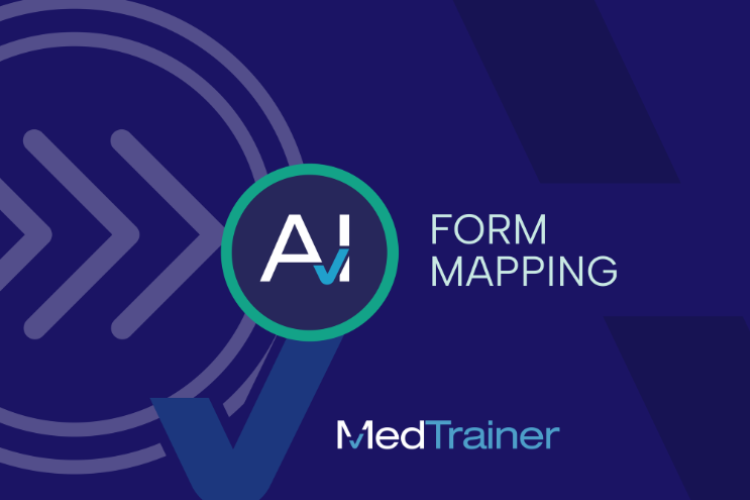
AI steps in to handle the repetitive, time-consuming tasks that slow credentialing teams down. MedTrainer’s AI-supported workflows can recognize document types, extract key information, and auto-populate privileging or appointment forms using verified provider data. Instead of manually typing information into privileging or appointment forms, AI Form Mapping auto-fills fields based on verified provider data. Our AI-enhanced workflows reduce human error, speed up form completion, and simplify provider document management without constant manual editing. For teams managing high volumes, AI feels like gaining an extra set of hands that never miss a detail. It makes privileging smoother, faster, and far less stressful.
Is it possible to see the real-time status of privileging applications?
Yes! With MedTrainer, real-time status tracking is built into every step of the privileging process. You can see exactly where an application stands, what’s been completed, and what still needs attention. Color-coded dashboards highlight pending tasks, upcoming expirations, and approvals waiting on specific users. This means you’re never guessing or chasing down updates through email. Providers, credentialing specialists, and leaders all have access to the same up-to-date information, so communication stays aligned and nothing slips through the cracks. Whether you’re overseeing a single clinic or a multi-facility network, you’ll have transparent, up-to-the-minute insight that keeps the process moving and reduces unnecessary delays. It’s a clear, organized way to stay ahead of setbacks and avoid last-minute scrambles.
How does centralized management improve efficiency for large healthcare organizations?
For multi-facility organizations, centralized management eliminates the inconsistent, fragmented processes that often lead to delays and repeated work. MedTrainer brings all privileging, credentialing, and payer enrollment software into one platform, giving every team access to the same templates, data, and approval pathways. This reduces duplication, standardizes expectations across locations, and improves reporting accuracy. Leaders gain system-wide visibility into privilege sets, compliance risks, and approval timelines, while credentialing teams save hours previously spent tracking down information between departments. The result is faster decision-making, fewer errors, and a more organized privileging process across the entire organization.
What are the main advantages of using provider privileging software for hospitals?
In short, hospitals benefit tremendously from privileging software because it replaces a traditionally manual, error-prone process with something organized, reliable, and automated. MedTrainer helps hospitals reduce delays with automated packet creation, clean approval workflows, and electronic signatures. Everything is audit-ready, with consistent templates and real-time visibility that help teams stay compliant with accrediting bodies. Because all data lives in one system, hospitals avoid the confusion that comes from scattered documents and inconsistent processes between departments or locations. Providers get cleared faster, committees spend less time reviewing incomplete files, and credentialing teams spend less time fixing avoidable mistakes. It’s a clear upgrade in both workflow efficiency and patient-care readiness.
How does MedTrainer’s software help ensure compliance with hospital credentialing standards?
MedTrainer is built to support compliance with major accrediting bodies, including The Joint Commission, NCQA, and DNV. Automated primary source verifications, real-time exclusion checks, and accurately tracked approval histories give you defensible, audit-ready documentation for every provider. Our privileging automation standardizes forms, signatures, and workflows so they’re applied consistently, minimizing the possibility of errors or lapses. Because all documents, verifications, privileges, and appointments are stored in one place, surveys and audits become significantly easier. The system’s credentialing dashboards and reporting tools surface compliance risks early, helping teams stay ahead of deadlines and maintain a fully compliant privileging process. MedTrainer is designed to give you complete confidence that your documentation, processes, and provider records are always up to date and survey-ready.
How much time can healthcare organizations save with automated privileging workflows?
A lot! Automated privileging workflows dramatically reduce the hours spent compiling packets, updating documents, filling forms, and chasing signatures. AI-powered form filling, automatic packet updates, and real-time reminders keep the process moving without constant oversight. For teams managing dozens or hundreds of providers, these time savings add up quickly and help prevent bottlenecks that affect onboarding and scheduling. Organizations often see faster approvals, fewer delays, and reduced administrative workload (all without adding extra staff). The ripple effect is significant. Providers start seeing patients sooner, revenue flows faster, and credentialing teams finally get breathing room to focus on higher-value tasks instead of putting out fires.